Clear troubleshooting, not guesswork
We isolate the fault using the right checks for your equipment type: gas vs electric, tank vs tankless, and vented vs direct-vent setups. You get an explanation that matches the symptoms you are seeing.
Water Heater Repair · Raleigh, NC
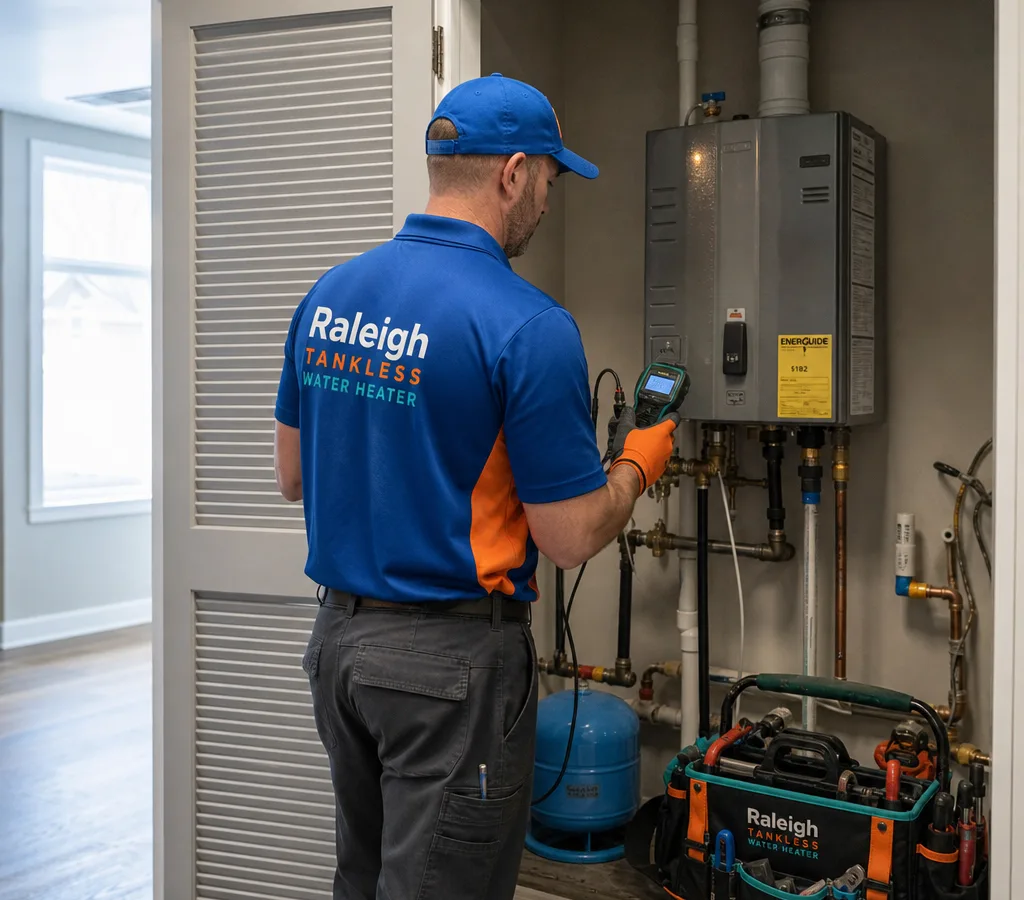
No hot water, leaks, odd noises, or temperature swings? Get fast scheduling, a clear diagnosis, and a repair that holds up in real use across Raleigh homes.
Find The Failure First
If you searched for water heater repair Raleigh NC, you are probably dealing with a disruption you feel right away: cold showers, lukewarm water, a slow recovery, or a puddle near the unit. Our job is to find the specific failure point, explain it plainly, and fix it the right way.
In Raleigh, we see everything from aging tank heaters in older homes near Five Points to newer tankless installs in North Hills and mixed equipment in downtown condos. The symptoms can look similar even when the cause is different. A failing thermostat can mimic a gas supply issue. A clogged inlet screen can look like a bigger failure. A small leak at a fitting can be mistaken for a tank breach. We approach each repair with a quick safety check, a focused set of tests, and a written scope before any work starts.
Raleigh Tankless Water Heater handles water heater repair for both tank and tankless systems. If your unit is repairable, we will repair it. If it is not, you will know why, with options that fit the space, venting, and your household demand.
For an overview of our company and service approach, you can also review Tankless Water Heater Services.
Diagnostic Standards
We isolate the fault using the right checks for your equipment type: gas vs electric, tank vs tankless, and vented vs direct-vent setups. You get an explanation that matches the symptoms you are seeing.
Before we start, we outline what is being repaired, what parts are involved, and what we are changing. If there are options, we will compare them so you can choose confidently.
Water heaters touch gas, electricity, combustion air, venting, and pressure relief. We verify key safety items like shutoffs, relief valve discharge routing, and proper connections as part of the visit.
We check and correct common causes of poor performance: temperature setpoints, flow restrictions, sediment and scale impact, and cycling issues that can shorten component life.
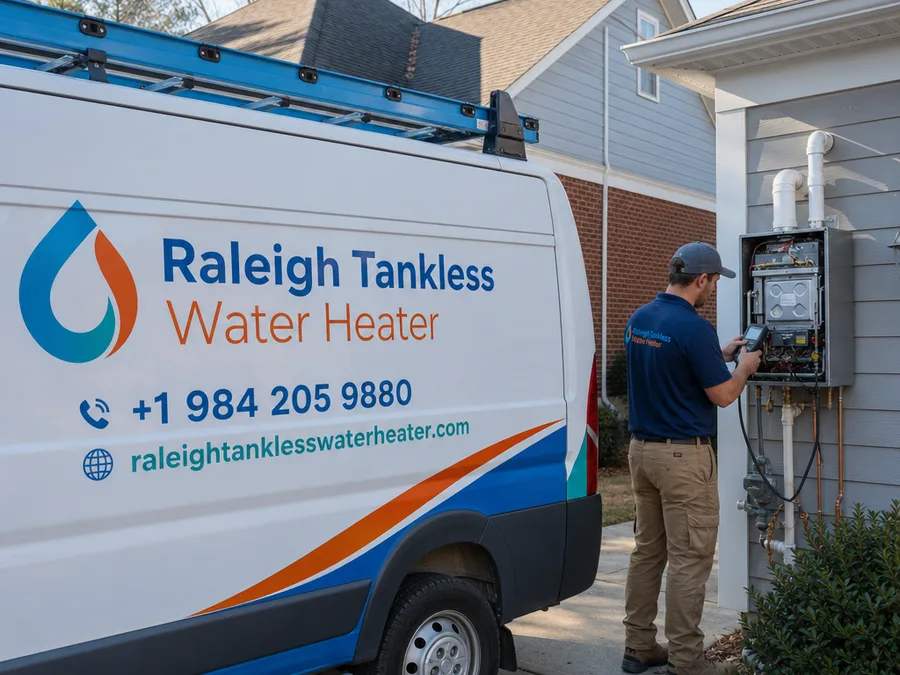
Water heater problems often happen in tight closets, attics, garages, and finished mechanical rooms. We protect floors and work clean so the repair does not create a second project.
Symptoms Point To The Cause
Most water heater failures fall into a few categories, and each category has telltale signs.
If you are in a tight townhouse mechanical closet in Glenwood South or a garage install near Brier Creek, access and venting style change how we approach the repair. We plan the work to fit the space you actually have.
Triage To Verification
You tell us the symptoms (no hot water, leaking, error code, noise). We ask a few targeted questions about fuel type and equipment style so we arrive prepared.
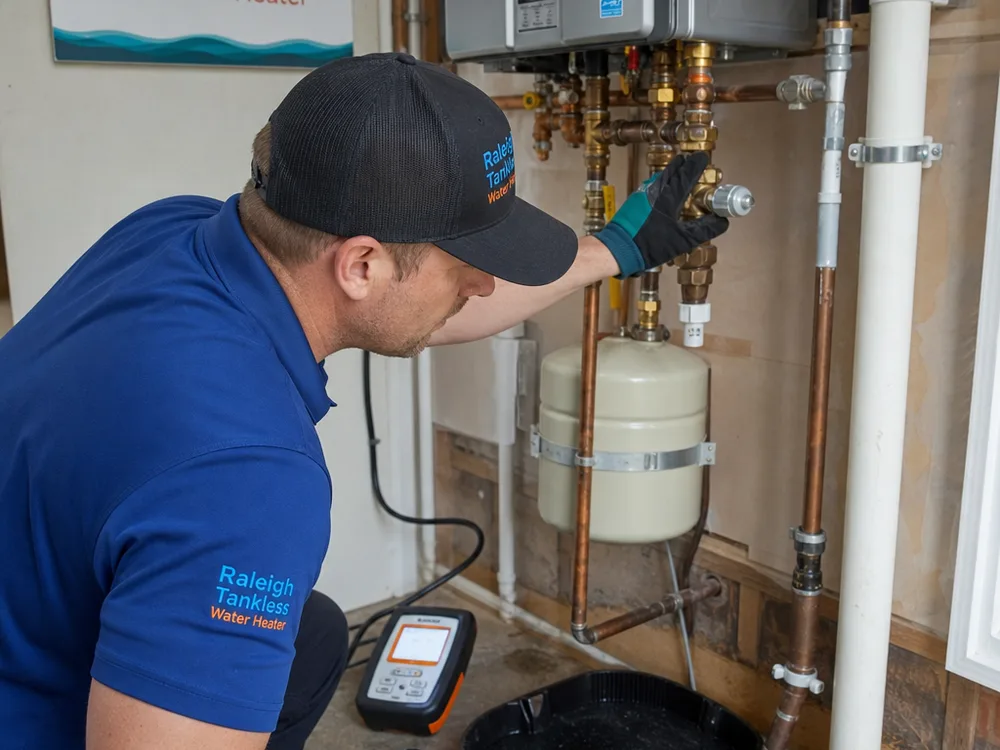
We start with shutoffs, venting basics on gas units, and visible leak or electrical concerns. If something is unsafe to run, we explain the risk and the immediate next step.
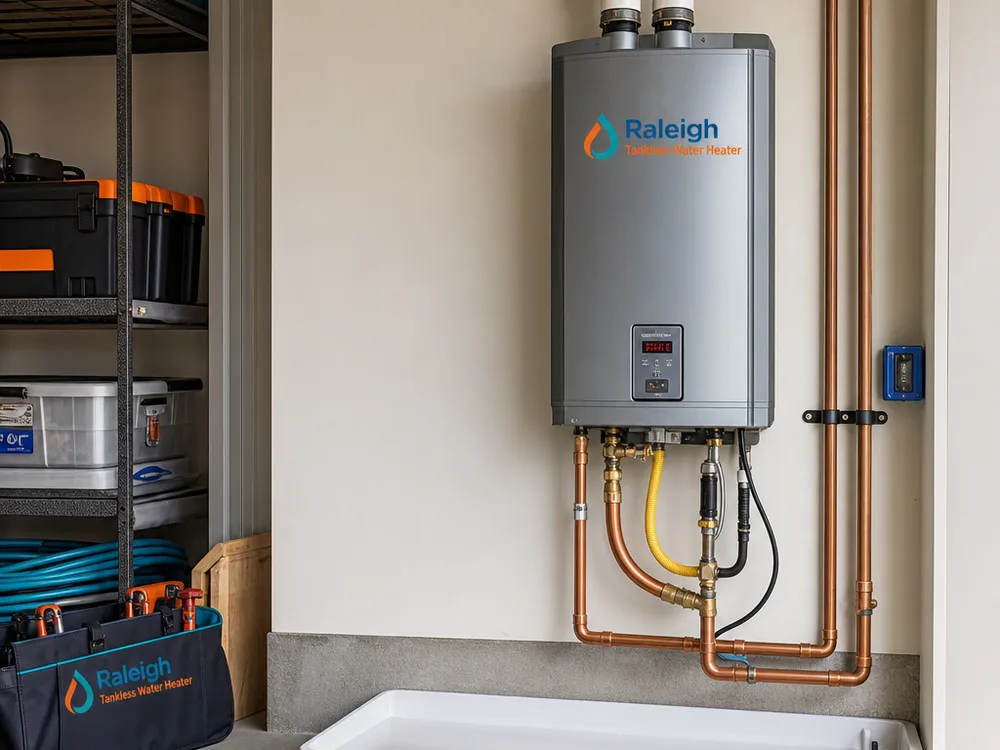
We verify power, gas supply, ignition, sensors, thermostats, elements, and flow/temperature behavior depending on the unit. For tankless, we also check inlet screens, flushing history, and vent/intake conditions.
You get a clear description of what failed and what we recommend. If a repair is marginal because of age or tank condition, we say so and explain alternatives.
We complete the repair, bring the system back online, and verify stable hot water delivery. We leave the area clean and review any simple maintenance that helps prevent a repeat issue.
Planning Your Repair
Water heater repair in Raleigh typically ranges from about $175 to $900, depending on the problem, parts required, and whether the unit is tank or tankless. Smaller electrical or valve-related repairs are often on the lower end, while control boards, gas valve components, or tankless ignition and sensor issues can land higher.
Your final price depends on diagnosis time, access (tight closet, attic, or garage install), venting or gas line modifications if needed, and whether scale or corrosion has caused secondary damage. We confirm the exact cost after an on-site inspection and a written scope.
Diagnose Before Replacing
Common Questions
Yes. We troubleshoot and repair standard tank water heaters (gas and electric) and tankless units, including issues like ignition failures, element and thermostat problems, valve leaks, sensor faults, and performance complaints such as temperature swings.
Availability depends on the day and current demand, but we prioritize true no-hot-water situations and active leaks because they disrupt the home immediately. When you reach out, share whether the unit is tank or tankless and whether there is any leaking so we can triage properly.
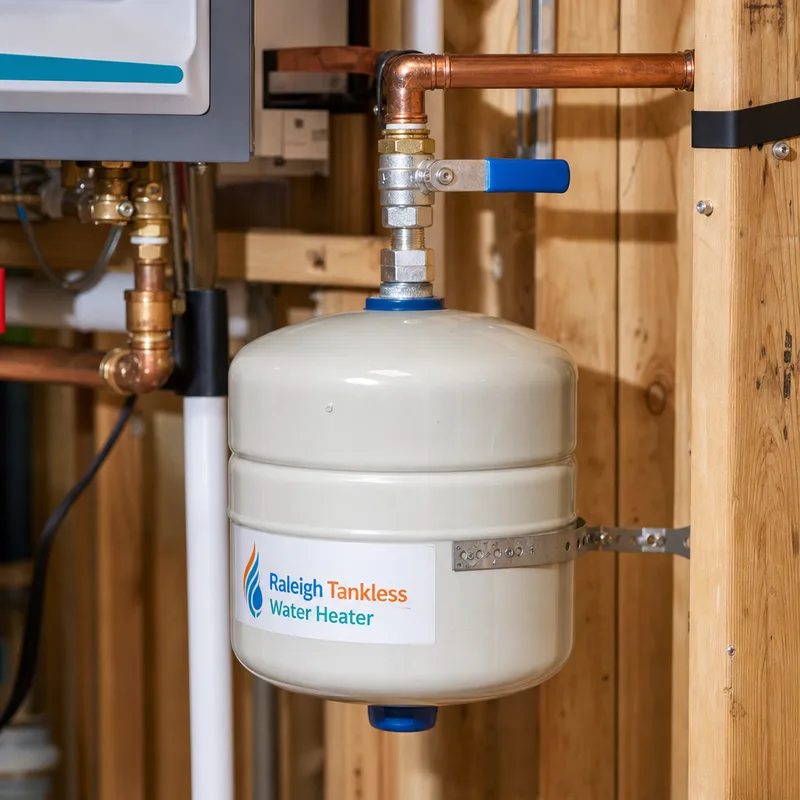
A leak at a fitting, valve, relief valve, or expansion tank connection is often repairable, but a tank that is leaking from the body of the tank usually is not. We confirm the exact leak source first, because the right fix depends on where the water is actually coming from.
That symptom often points to a flow issue (not enough flow to keep the burner on), a clogged inlet screen, scale restriction in the heat exchanger, or an ignition/sensor fault that trips the unit off. We verify flow rate behavior and check for restrictions and fault history during diagnosis.
Often, yes. Temperature swings can come from the water heater controls, a mixing valve, or fluctuating flow from fixtures. We start at the water heater to confirm stable output temperature, then narrow the cause so you are not replacing parts that are not failing.
It can be, if the tank is sound and the failure is limited to a serviceable part like an element, thermostat, or a valve. If corrosion, repeated leaks, or major component failure suggests short remaining life, we will tell you plainly and lay out practical options for next steps.
If it is safe to do so, stop the water supply to the heater and avoid contact with any electrical components or standing water near outlets. For gas units, do not run the system if you suspect improper venting or gas odor. Then schedule service so we can locate the leak source and prevent further damage.
Schedule A Diagnosis
Tell us what you are seeing (no hot water, leak location, any error code, and whether the unit is tank or tankless). We will schedule a visit, pinpoint the cause, and provide a clear repair plan before work begins.